


**India’s wheat flour export landscape has entered a new phase.** On 24 August 2026, the Directorate General of Foreign Trade (DGFT) issued Notification No. 34/2026-27, revising the export policy for wheat flour and related products under **HS Code 11010000** from **“Prohibited” to “Free” with immediate effect**. The covered products include wheat or meslin flour (Atta), Maida, Semolina (Rava/Sirgi), Wholemeal Atta and Resultant Atta. :chatgpt-content-reference{index="0"}
For entrepreneurs, flour millers, food manufacturers and exporters, this policy development creates a reason to reassess the potential of a **Flour & Atta manufacturing and export business from India**.
But a successful export business requires more than an export-policy change. It requires the right **wheat processing technology, production capacity, quality systems, packaging, branding, market research, compliance and export strategy**.
This is where AATOMIZE can play an important role as a food-processing machinery partner.

For many years, wheat flour exports were subject to restrictions. In January and February 2026, DGFT notifications continued to describe wheat flour under HS Code 1101 as prohibited while permitting specified quantities through export authorisations. :chatgpt-content-reference{index="1"}
The position changed significantly with **DGFT Notification No. 34/2026-27 dated 24 August 2026**.
The notification states that the export policy for:
- **Wheat or Meslin Flour (Atta)**
- **Maida**
- **Semolina (Rava/Sirgi)**
- **Wholemeal Atta**
- **Resultant Atta**
under **HS Code 11010000** has been revised from **Prohibited → Free**, effective immediately. :chatgpt-content-reference{index="2"}
The change has also been listed by APEDA among the DGFT notifications issued in 2026. :chatgpt-content-reference{index="3"}
This does not mean that exporters can ignore other requirements. Product classification, customs procedures, food-safety requirements, destination-country regulations, labelling, documentation and buyer specifications still need to be checked before exporting.
But from a business-planning perspective, the change provides an important opportunity to evaluate a new question:
> **Can an entrepreneur build a flour manufacturing business in India with international markets in mind from the beginning?**
# Why Start a Flour & Atta Business?
Wheat is one of the world's major staple grains, and flour is a value-added food product.
Instead of selling raw wheat, a manufacturer can create additional value through:
**Wheat → Processing → Flour → Packaging → Branding → Distribution → Export**
This creates several possible business models.
### 1. Local Flour Manufacturing
Produce atta and flour for local consumers, retailers, hotels, restaurants and institutions.
### 2. Regional Flour Brand
Build a branded product and distribute it through dealers, supermarkets and retail networks.
### 3. Institutional Flour Supply
Supply bulk flour to hotels, hostels, restaurants, institutions, food businesses and other commercial users.
### 4. Private-Label Manufacturing
Manufacture flour for other brands and distributors.
### 5. Export-Oriented Flour Manufacturing
Develop products, packaging and production systems specifically for international customers.
### 6. Integrated Food-Processing Business
Start with flour and gradually expand into other grain and food-processing categories.
---
# Why Machinery Selection Matters
A flour business is not simply about purchasing a grinding machine.
The entrepreneur needs to understand:
- Raw material quality
- Wheat cleaning
- Grinding technology
- Capacity
- Product specifications
- Particle size
- Grading
- Dust management
- Power consumption
- Labour requirement
- Packaging
- Quality control
- Maintenance
- Expansion requirements
Choosing machinery according to the **business model** is therefore more important than choosing machinery only according to horsepower.
# AATOMIZE: From Grinding Machine to Complete Processing Solution
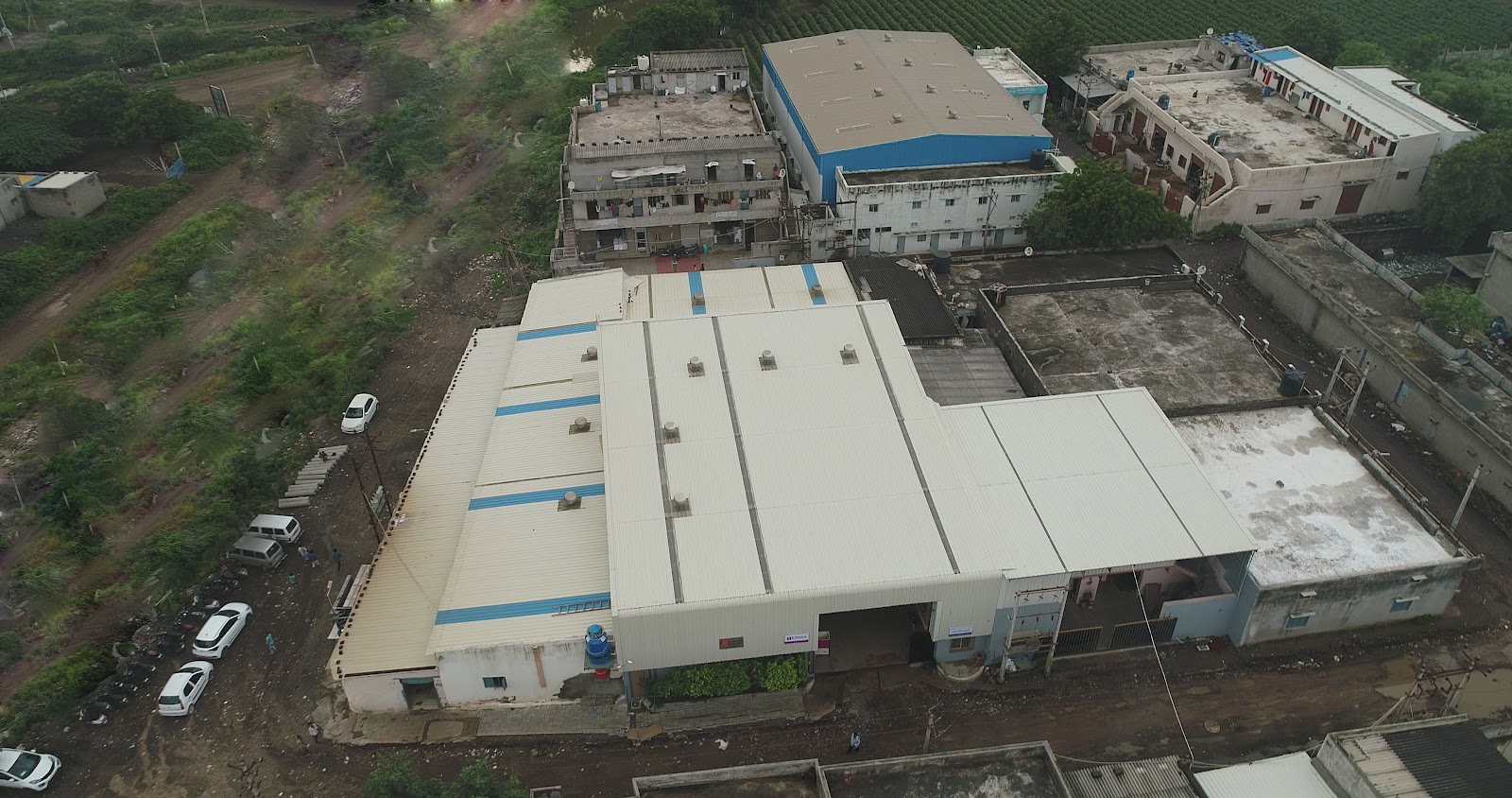
AATOMIZE describes itself as a group of companies with expertise in machinery R&D, food-processing machinery, sheet-metal machinery manufacturing and induction-motor manufacturing. Its brochure lists a wide range of food-processing equipment, including **2-in-1 Pulverizers, Masala Pulverizers, Flour Mills, Dal Machines, Sugar Grinding Machines, Rice Mills, Grading Machines, Daliya Machines, Coffee Roasters, Vibro Machines, Packing Machines and Atta Graders**. :chatgpt-content-reference{index="4"}
The company also highlights in-house capabilities including:
- Sheet Metal Laser Cutting
- CNC Bending
- Fabrication
- Laser Welding
- Coating
- Assembly
- Testing
This integrated manufacturing approach supports the development and production of food-processing machinery. :chatgpt-content-reference{index="5"}
For an entrepreneur, this can be valuable because a flour business often requires more than one machine.
# 5 HP to 50 HP: Different Capacity Options
AATOMIZE's machinery portfolio includes different pulverizer configurations and capacities.
For example, the AATOMIZE brochure lists a **5 HP 2-in-1 Pulverizer, model AZ502A**, with a listed grinding capacity of **40–60 kg/hour**, three-phase power and a double-chamber configuration. :chatgpt-content-reference{index="6"}
For larger requirements, the brochure lists heavy-duty 2-in-1 pulverizers including:
- **7.5 HP:** 60–100 kg/hour
- **10 HP:** 70–120 kg/hour
- **15 HP:** 120–160 kg/hour
- **20 HP:** 150–200 kg/hour
- **30 HP:** 250–300 kg/hour
- **50 HP:** 400–450 kg/hour
These are brochure-listed capacities; actual output can vary depending on material, sieve size and operating conditions. :chatgpt-content-reference{index="7"} :chatgpt-content-reference{index="8"}
This range allows an entrepreneur to think about capacity in stages rather than assuming every business requires a large plant from day one.
# Start Small. Build a Scalable Business.
A new entrepreneur may not need to immediately invest in a large production facility.
A practical approach can be:
### Stage 1 – Start
Develop a small production operation and establish local customers.
### Stage 2 – Build the Brand
Develop packaging, product identity and distribution.
### Stage 3 – Increase Production
Add capacity when demand becomes consistent.
### Stage 4 – Develop Export Customers
Research international markets and buyers.
### Stage 5 – Build an Export-Oriented Plant
Configure cleaning, grinding, grading, packing and quality systems according to the target market.
This approach can reduce the risk of investing in capacity before the market is understood.
# A Complete Flour Processing Line
A professional flour business can be designed around a process such as:
### 🌾 1. Wheat Reception
Raw wheat is received and stored according to the production requirement.
### 🧹 2. Wheat Cleaning
Foreign material and unwanted particles need to be removed before processing.
### ⚙️ 3. Grinding
The cleaned grain is processed using an appropriate grinding system.
### 🔄 4. Separation / Cyclone
Where applicable, the processing line can incorporate separation and dust-handling systems.
### 📊 5. Grading
A grading system can be used to obtain the desired product characteristics.
### 🔬 6. Quality Control
The finished flour should be evaluated according to the product and destination-market specifications.
### 📦 7. Packing
The flour is packed into the appropriate retail or bulk packaging.
### 🏷️ 8. Branding
Packaging becomes an important part of the customer's perception of the product.
### 🚢 9. Export
The finished product can be prepared for international shipment after completing applicable export and destination-country requirements.
The result is a complete business model:
> **From Grain to Export-Ready Flour.**
---
# More Than a Pulverizer: Build a Complete Food Business
One of the strengths of a broader machinery portfolio is the ability to expand beyond a single product.
AATOMIZE's brochure includes machinery for:
**Flour Processing**
**Masala Processing**
**Rice Processing**
**Dal Processing**
**Daliya Processing**
**Sugar Grinding**
**Grading**
**Mixing**
**Packing**
For example, the brochure lists AATOMIZE Dal Mill machines in 2 HP, 3 HP and 5 HP configurations, with different listed capacities. :chatgpt-content-reference{index="9"}
It also lists Daliya machines from smaller capacities through larger systems, including models with listed capacities of up to 800–1,000 kg/hour. :chatgpt-content-reference{index="10"}
This creates an opportunity for entrepreneurs to think about **multi-product food processing** rather than depending on one product forever.
# Build Your Own Atta Brand
Machinery is only one part of the opportunity.
The next step is branding.
Imagine creating a flour brand positioned around:
### 🌾 Indian Wheat
### 🇮🇳 Made in India
### 🔬 Quality Processing
### 📦 Hygienic Packaging
### 🌍 International Standards
A brand can offer products such as:
- Whole Wheat Atta
- Premium Atta
- Maida
- Semolina
- Wholemeal Flour
- Resultant Atta
- Institutional Flour
- Bulk Flour
- Private-Label Flour
The exact product portfolio should be determined by customer demand and applicable regulations in the target market.
# Export Is a Business, Not Just a Shipment
Many new entrepreneurs think:
> “If export policy is free, I can manufacture flour and immediately export it.”
A professional export business requires much more planning.
Before shipping, an exporter should evaluate:
### 📋 Documentation
Importer-exporter documentation, commercial documents and shipping documentation.
### 🔬 Quality
Product specifications should match the buyer's requirements.
### 🏷️ Labelling
Packaging and labelling need to comply with applicable destination-country requirements.
### 📦 Packaging
The packaging should be appropriate for the product, transportation and market.
### 🚢 Logistics
Freight, containerisation, port handling and delivery terms need to be planned.
### 💰 Working Capital
The entrepreneur needs sufficient funds for wheat procurement, production, packaging, inventory and receivables.
### 🤝 Buyer Verification
International buyers should be properly evaluated before commercial commitments.
### 🌍 Country Research
Each destination market should be studied separately.
The word **“Free”** in the DGFT export-policy column does not eliminate other applicable legal or commercial requirements.
# Which International Markets Should an Entrepreneur Study?
There is no single market that is automatically right for every exporter.
Instead, an entrepreneur should research markets based on:
- Wheat flour consumption
- Indian-origin consumer base
- Import volumes
- Import duties
- Local production
- Competition
- Retail prices
- Packaging requirements
- Food regulations
- Logistics cost
- Payment terms
- Distributor availability
Potential markets can then be shortlisted using actual trade data and buyer research.
This is especially important because an attractive export market on paper may not necessarily produce attractive margins after freight, duties, packaging and distribution costs.
# AATOMIZE Can Help Entrepreneurs Think in Plant Solutions
The biggest opportunity is not simply:
**“Buy an AATOMIZE machine.”**
The bigger opportunity is:
### **“Design the right production system for your business.”**
AATOMIZE's machinery range allows entrepreneurs to consider different production levels and configurations.
The company's stated quality focus includes customer requirements, easy maintenance, safety and security, finishing, product quality and adoption of modern technology. :chatgpt-content-reference{index="11"}
This is important because the machine should ultimately serve the business—not the other way around.
# A New Entrepreneur Can Start With a Business Plan
Before investing, prepare a simple project report covering:
### Investment
- Land / building
- Machinery
- Electrical installation
- Storage
- Packaging equipment
- Laboratory / quality equipment
- Office
- Working capital
### Production
- Wheat requirement
- Production capacity
- Working hours
- Product mix
- Packaging sizes
### Sales
- Local market
- Distributor network
- Institutional customers
- Export customers
### Financial Planning
- Raw material cost
- Processing cost
- Packaging cost
- Labour
- Electricity
- Maintenance
- Logistics
- Marketing
- Finance cost
- Selling price
- Gross contribution
### Export Planning
- Target country
- Buyer type
- Product specification
- Packaging
- Required documents
- Freight
- Import requirements
This approach turns a machine purchase into a **business investment decision**.
# From Indian Grain to Global Markets
India has a large agricultural and food-processing ecosystem.
The latest wheat-flour export policy change provides an opportunity for entrepreneurs to reconsider how they create value from wheat.
Instead of:
**Buy Wheat → Sell Wheat**
an entrepreneur can explore:
**Buy Wheat → Process → Add Value → Brand → Pack → Sell → Export**
That is the fundamental business opportunity.
And machinery becomes the bridge between the raw material and the finished product.
# Why AATOMIZE?
AATOMIZE brings together experience in food-processing machinery manufacturing and related engineering capabilities. Its brochure positions the company around grinding and grain-processing expertise and lists a broad portfolio of food-processing machinery. :chatgpt-content-reference{index="12"}
For entrepreneurs, the key benefit is the ability to discuss:
**Capacity → Machine → Process → Plant → Product → Business Model**
rather than looking at one machine in isolation.
# Conclusion: The Time to Explore a Flour Export Business
The **24 August 2026 DGFT policy change** is an important development for India's wheat flour industry. The export policy for products covered under HS Code 11010000—Wheat/Meslin Flour (Atta), Maida, Semolina, Wholemeal Atta and Resultant Atta—has moved from **Prohibited to Free with immediate effect**. :chatgpt-content-reference{index="13"}
For entrepreneurs, this is an opportunity to ask new questions.
Can you build a flour brand?
Can you manufacture atta for international customers?
Can you create a private-label flour business?
Can you build a commercial flour plant?
Can you develop a long-term export business from India?
The answer depends on your investment, market, product, execution and compliance strategy.
But one thing is clear:
## 🌾 The opportunity deserves serious evaluation.
And if your goal is to build a **Flour, Atta or Food-Processing Business**, the first step is to select the right machinery and design the right production system.
### **AATOMIZE**
**The Grinding Expert | The Grain Expert**
**From Grain → To Flour → To Brand → To Global Markets.**
For machinery and flour-processing solutions, visit [AATOMIZE](https://www.aatomize.com?utm_source=chatgpt.com).
## SEO Information for the AATOMIZE Website
**SEO Title:**
**Wheat Flour Export Business from India | Start Flour & Atta Business with AATOMIZE**
**Meta Description:**
India's wheat flour export policy is now Free for HS Code 11010000. Explore the flour and atta export business opportunity and AATOMIZE machinery solutions.
**Suggested URL Slug:**
`wheat-flour-export-business-india-aatomize`
**Primary Keyword:**
**Wheat Flour Export Business from India**
**Secondary Keywords:**
- Wheat flour export from India
- Atta export business
- Flour mill business
- Flour mill machine
- Atta plant
- Wheat flour processing plant
- Flour processing machinery
- Wheat flour export 2026
- DGFT wheat flour export policy
- Flour business opportunity
- Food processing business
- Flour mill machine manufacturer India
- Wheat flour plant
- Export-oriented flour plant
**Suggested CTA:**
### **Planning to Start a Flour or Atta Business?**
**Talk to AATOMIZE about the right machinery, capacity and complete flour-processing solution for your business.** 🌾⚙️🌍


Post a Comment